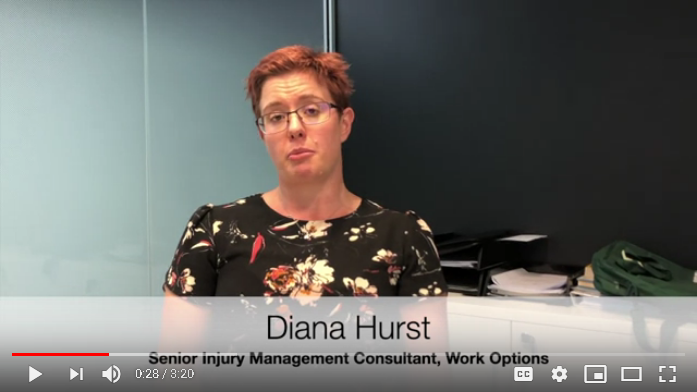
Our Senior Injury Management Specialist Diana Hurst guides you through our most common questions regarding Workers Compensation claims.
Related Posts
-
Are employers legally required to offer Employee Assistance Programs?
Workplace Health and Safety legislation in Australia requires employers to provide a safe work environment that protects worker’s physical and mental health. While employers are not legally required to offer Employee Assistance Programs, they do have a legal responsibility to provide a psychologically safe workplace, and a duty of care and ethical responsibility to positively promote mental health. And there is an abundance of evidence proving that EAPs are an effective mental health tool for employees and employers alike. So why wouldn’t you provide this service to your staff?
An EAP is a confidential counselling service offered to employees and their families, who are seeking assistance with work stressors or conflicts, relationship issues, financial concerns, anxiety or any other issue, which has the potential to affect wellbeing.

With one in five employees in Australia suffering from poor mental health, the combined cost of absenteeism, presenteeism and psychological workers compensation claims, cost Australian businesses close to $11 billion annually. So whatever the initial cause of the problem, employers need to recognise and respond to psychological risk factors, and put in place effective measures to minimise physiological harm and promote positive mental health.
EAPs can assist employees:
- Learn how to deal with issues and receive coping strategies to manage these issues before they become a bigger problem
- Get immediate access to help when stressors build up and escalate, resulting in a potentially critical incident
- Assist employees feel supported by their employer and understand that their mental health and wellbeing is important
- Provide assistance to those who may not be able to afford it
- Improve productivity, absenteeism and presenteeism, by managing their issues in a proactive way
- Stay at work or return to work sooner than if they had no help
EAPs can assist employers:
- Provide a positive impact on business profits with better productivity, absenteeism and presenteeism – a Pricewaterhouse Coopers study showed that for every $1 spent on mental health initiatives, they receive a return on investment of $2.30 (more for gas, electricity, water, residential, commercial, construction and waste service industries)
- To take a proactive role in promoting WHS practices, reducing risk and achieving a healthier work environment
- To meet WHS obligations by protecting workers against harm to their mental health
- Improve staff retention with happier, healthier employees who feel valued within their work community
For many Australian businesses an Employee Assistance Program is already an integral part of their mental health and WHS strategy. But for those who haven’t yet adopted this approach, it’s important to understand that pressures at home and pressures at work go hand in hand, and affect all areas of our lives without proper intervention. For the best chance at creating a positive mental health environment at work, contact Work Options to discuss how our Employee Assistance Program can assist you.
Related reading:
An Employee Assistance Program Story
When stress in the workplace becomes a bigger issue
The role of an EAP in improving staff performance -
Managing the return to work process: a guide for employers and workers
Despite the physical and financial risk of workplace injuries, when managed correctly, employee injuries can be a positive experience for all involved. But the first step is to recognise that both employers and employees play a role in the return to work process, and when cooperating together, return to work outcomes can be achieved quickly and efficiently.
The next step in the process is to understand the health benefits of work; a concept which should be acknowledged and accepted by both parties in order to achieve the best outcomes. Here’s a quick recap…

The final and perhaps most important step, is to understand employer and employee obligations in the return to work process. And beyond that, what else should and can be done by each for the most effective injury management, reducing physical and financial risk.
Employer obligations
Beyond the legislation which outlines what is legally required from employers, there is more that employers can do to get injured workers back to work sooner. Here’s a summary:- Report the injury to your insurer as soon as possible – legally you have 48 hours to make a claim however the sooner you report the incident, the more likely you are to have the injured worker back to work sooner.
- Offer support – while your to-do list just grew significantly now that you have an injured worker, it’s important to remember that they will also have a growing list of concerns. Positive encouragement and understanding of the situation throughout the process will help your worker to feel as though they are supported. Ask them what they need, and put the answers into action.
- Regular communication – ensuring regular communication while the worker is off work, and again when they return, is critical to gain a positive response and willingness from the employer to get back to work as soon as possible. As with support, communication reaffirms to the employee that they are valued and appreciated.
- Provide suitable work – the purpose of alternate duties is so that the employee can recover at work, not only saving money on lost time and efficiencies, but also ensuring that the worker is improving their functional capacity through movement, and maintaining positive mental health. For the best possible outcome, suitable duties should be determined collaboratively (where reasonably possible) so that the injured worker is reassured that they are still a respected employee whose wellbeing is valued.
- Involve the worker in the Return to Work Plan – as with suitable work duties, it’s important to involve the injured worker in the development of their Return to Work Plan. The worker should have a say in the goal of the plan, which should focus on current capabilities rather than restrictions, as well as breaks and work hours based on these capabilities.
- Prepare colleagues for the workers return – anxiety and nerves are common in employees who have been off work for some time. It’s important that they feel supported by colleagues as well as management upon their return, especially if they are not returning to their pre-injury capacity. Ensure other staff are aware the worker is returning, as well as any changes to their role, and that they offer support and encouragement where possible.

Employee obligations
While legally speaking, the majority of obligations fall upon the employer, employees have a responsibility to take care of themselves, ensuring their injury does not get worse or return. Here’s a summary of employee obligations:- Report the injury to a Supervisor as soon as it happens and answer any questions honestly.
- Actively participate in the development and management of the Return to Work Plan – and make every effort to follow the plan, advising of any difficulties or changes throughout the process.
- Communicate – openly and honestly to all parties throughout the process, including your employer, Return to Work Coordinator, doctors and others. Open communication is key to returning to work sooner.
- Comply with all advice and use correct work methods – this means if the injury is physical, follow correct ergonomic procedures and correct work methods, to ensure your injury is not aggravated further. If the injury is psychological, ensure you voice any concerns, stressors or problems with your Supervisor as soon as they occur, so that solutions can be put in place and further injury avoided.
- Always follow the advice of treating practitioners and doctors
Managing the return to work process can seem like a daunting process, however it’s encouraging to note that while many injured workers take some time off work, in 2018 the return to work rate was above 80%.
For the best chance at maintaining good return to work outcomes, speak to Work Options about how we can help to protect your business.
Related reading:
Why work is the best treatment for injury recovery
Case study: when altering your reactions can affect RTW outcomes
Common injury management mistakes guaranteed to rise insurance premiums -
Mental Health Audit: how mentally healthy is your workplace?
Mental health in the workplace is fast becoming an important issue for managers and supervisors, and can be a challenging topic to manage. In Australia, it is estimated that one in five employees will be suffering from some form of mental health issue, which is often associated with high personal and economic costs; in fact, it is one of the main reasons for reduced work performance, absenteeism and presenteeism. Poor mental health in the workplace is too significant to ignore.
Consider these questions to determine how mentally healthy your workplace really is:

Does you workplace:
-
- Have a detailed, promoted and enforced Mental Health Policy in place?
- Have senior managers who are actively involved in mental health promotion, encouraging a good level of workplace communication around psychological health and safety promotion?
- Include mental health resources and educational materials in the staff recruitment and induction process?
- Provide mental health education and first aid training to employees to increase awareness of mental health issues, reduce stigma and better overall mental health?
- Support and promote mental health related events such as R U OK? Day, Mental Health Awareness Month?
- Encourage flexibility such as: flexible start/finish times, flexible days, rostered days off, work-from-home, or job sharing)?
- Encourage employee participation in decision making and problem solving?
- Have and enforce anti-bullying policies which are specific, and detail guidelines for managers on their role in countering bullying?
- Effectively and inclusively explain workplace changes and/or restructures to employees, encouraging feedback and comments, in order to mitigate negative effects on wellbeing?
- Offer coaching and mentoring sessions and development opportunities, to employees looking to grow themselves and their career?
- Encourage physical activity throughout the working day as well as outside of hours?
- Promote reward structures?
- Conduct regular wellbeing checks to identify symptoms of poor mental health and facilitate early treatment?
- Provide and promote Employee Assistance Programs and/or workplace counselling services?
- Offer resilience programs such as stress training or cognitive behavioural interventions to help employees better manage work-related stress and challenges?
- Provide supervisors and managers with mental health training, tools and resources to assist in employee recovery and mental health management?
- Provide alternate duties or partial sick leave to support employees struggling with mental illness?
- Provide comprehensive Return to Work programs based on cognitive behavioural therapy, customised according to individual needs?
- Regularly conduct employee satisfaction surveys and make changes based on feedback and recommendations?
- Have a high rate of employees taking excessive sick days?
- Have a history of psychological injury claims?
- Have a history of high staff turnover?
How did your workplace do? If you answered ‘yes’ to most of these questions (with the exception of questions 20, 21, 22), congratulations it is highly likely that you’re providing employees with a mentally healthy work environment. If you found yourself frequently responding with ‘no’, or if you answered ‘yes’ to questions 20, 21 and 22, then take some of these points on board to implement healthy changes, a positive attitude and approach towards a mentally healthy workplace. Or to have a mental health professional conduct a thorough workplace assessment, and provide you with the best advice and proven mental health strategies and training seminars, contact Work Options.
Related reading:
Steps to preventing psychological injuries in the workplace
An Employee Assistance Program story
A simple guide to talking to employees about mental health -
-
Guide to employer obligations around poor air quality
The devastating bushfires around Australia are not only significantly impacting communities across the country, but should be an important reminder to employers about maintaining safe working environments with regards to air quality.
For weeks on end, major Australian cities have recorded unhealthy to hazardous air quality ratings, meaning that all reasonable precautions should be taken to protect employees against the dangers, in accordance with the Work Health and Safety Act 2011 and Work Health and Safety Regulations 2011.
If staff are working outdoors, employers should take the following steps to ensure WHS obligations are met, and workers remain as safe as possible:
- Reschedule work where possible until air quality improves for safer working outdoors
- People who are sensitive to smoke or suffer from a heart or lung condition should cease work and stay indoors until air quality has improved
- Conduct appropriate risk assessments prior to commencement of work
- Provide all appropriate personal protective equipment including P2 face masks and ensure employees are briefed on how to use equipment correctly
- Ensure any employees working alone or remotely have an effective means of communication and regularly check in with them
- Encourage employees to report any concerns about individual needs and seek medical advice where required
- Employers should regularly check the bushfire and air quality status near work areas, and advise workers of regular updates
- Encourage employees to take regular breaks, inside where possible, stay hydrated and work shorter hours if workload permits
- Always follow instructions and advice from emergency services and authority officials
Understandably it may be unrealistic to cease work completely when the bushfire crisis is ongoing, however health and safety of employees and others needs to be a priority for all employers. At the end of the day, the best way to reduce exposure to air pollution is to stay indoors where possible, in filtered air conditioning, with doors and windows shut.
For further information and advice:
- Red Cross: Disaster relief
- National: DSS Emergency Relief
- VIC: Vic Emergency
- NSW: NSW Office of Emergency Management
- SA: DHS Disaster Recovery
- QLD: Disasters and emergencies
- WA: Emergency WA
- ACT: Community Recovery
- NT: Recover from an emergency
- TAS: Recovery from an emergency
-
6 things employers should know about the workers comp system
No matter the industry, business size or insurance type, all employers have an obligation to support any person who is injured at work, and have a duty of care to assist in an active recovery process. Here are 6 things employers should know when navigating the Workers Compensation system:
- Employers are obligated under Australian law to have workers compensation insurance
- Employers have 48 hours to report injury and accidents otherwise iCare may charge an excess
- Injured workers must get an official Workers Compensation Certificate of Capacity from their GP or specialist, a standard Medical Certificate will not be accepted
- Businesses need a dedicated Return to Work Coordinator if they employ more than 20 people, their basic tariff premium exceeds $50,000 annually or who are self-insured or insured by a specialised insurer
- Employers are required to provide suitable work duties (as far as reasonably practicable) when a worker is able to return to work
- Section 248 of the Workers Compensation Act 1987 states: ‘an employer must not dismiss a worker because of a work-related injury within six months from when the worker first became unfit as a result of the injury’
For a detailed list of employer obligations under New South Wales workers compensation legislation, view more information at SIRA.
-
When performance reviews result in bullying and harassment claims, and how to avoid them
Reasonable performance management of staff, conducted in a rational and constructive manner is not workplace bullying. Unfortunately however, for many Managers, the performance review process can often result in bullying and harassment claims. The process usually goes like this…
- Employee is unhappy with their performance review
- Employee refers their complaint to HR or lodges a workers compensation claim to be investigated by the insurance company
- A contracted Mediator is introduced to each party and discusses their concerns separately
- The Mediator brings the two parties together to assist with communication and attempts to resolve the issue
- The issue is either resolved, handed back to IR or escalated to the Fair Work Ombudsman or other legislative body
Performance reviews are the norm in businesses today, however employers need to tread carefully when providing feedback on the quality and timeliness of work and performance, especially when they have been known to disagree with certain individuals in the past. Disagreements and head-butting are also normal, but bullying and harassment claims as a result are not. Follow our advice on the best way to conduct a performance review, reducing the risk of such claims:
- Before the review even begins, ensure any issues are dealt with at the time of occurrence – don’t wait until a workers performance review to bring up any issues, especially around safety, as the employee may think you’re knit-picking.
- Keep a written record of any issues – not only do you have evidence to back up your claims, but if issues progress to Fair Work, without a record demonstrating that you’ve dealt with the issue at the time, they may infer that you’ve condoned specific behaviour.
- Be consistent – across all employee communication, praise and feedback, values, practices and policies. Consistency ensures that workers don’t see your behaviour or reaction as more aggressive towards them than other employees, or unfair treatment.
- Follow procedure – ensure all paperwork has been filled out prior to the performance review and let the worker review it before the actual review takes place. This gives them time to form a response, provide situational examples and pose questions.
- Particularly for inferior reviews, have another management level staff member or supervisor join you and take notes. This allows you to backup any claims or comments made in the meeting, and will avoid a he-said, she-said situation.
- Let the worker have a support person – for a similar reason, the worker will be able to backup any claims or comments, as well as feel as though they’ve been fairly treated and supported throughout the process.
If performance issues need to be addressed, ensure that you are constructive and supportive, and provide feedback on the positive and negative outcomes. When treated with respect and when policies, procedures and guidelines are followed, there should be no reason for a performance review to turn into a bullying and harassment claim. For further support, or advice on how to manage these types of claims, contact your Work Health Safety Provider.